The safest way to learn how to install septic tank riser is to find the tank, check its condition, and choose parts that fit. A careful homeowner may do light digging and simple cleaning. Damaged lids, unsafe soil, buried utilities, or unknown openings need help from a septic professional.
Table of Contents
- Can a homeowner install a septic tank riser?
- What is a septic tank riser and why install one?
- What should you check before installing a septic tank riser?
- What tools and materials do you need to install a septic tank riser?
- How do you safely expose the septic tank lid?
- How do you measure and prepare the septic tank opening?
- How do you install and seal a septic tank riser?
- How should you backfill and finish around the riser?
- What can go wrong when installing a septic tank riser?
- When should you call a septic professional after installing a riser?
- Frequently Asked Questions
- Key takeaways
- Conclusion
Can a homeowner install a septic tank riser?
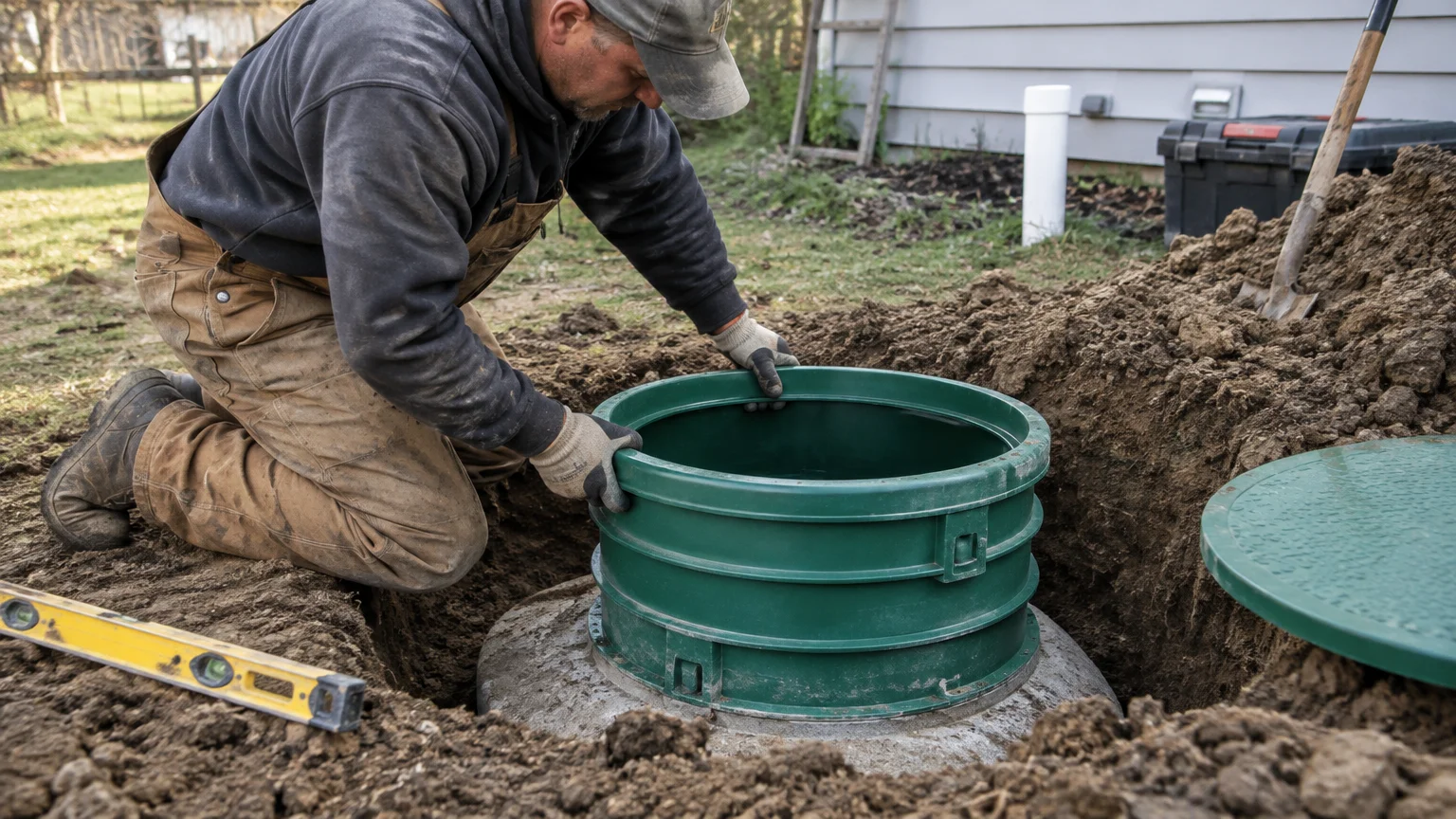
A homeowner may install a septic tank riser when the tank is easy to find, the opening is strong, and the work area is safe. The job still needs care. The riser must stay level, fit the opening, and keep soil and rainwater out of the tank.
A riser is a vertical access section above a septic tank opening. It brings the lid closer to the ground. This can make future checks and septic pumping easier. It can also save the owner from searching for a buried lid.
When the project may be suitable for a careful homeowner
The project may suit a careful homeowner who can follow the product guide. The tank should have a known location and a sound opening. The homeowner should also have a safe work area and a way to keep children and pets away.
Homeowners may do light digging, measuring, cleaning, and basic site work. They should stop if the soil moves, the lid is damaged, or the tank material is unclear. A septic tank can hold harmful gases. An open tank must never be left alone.
Simple checks and cleaning do not always need a professional. A homeowner can mark the area, remove light soil by hand, and check the outside of the lid. The owner should not enter the tank, lean over the opening, or force stuck parts.
When to hire a septic professional instead
A professional should do the work when the tank is hard to find or the opening is broken. Help is also wise when the tank sits near a driveway, building, wall, or drainage path. Local rules may require an approved part or a licensed installer.
Septic Tank Pumping Knoxville can help property owners decide if a riser project is safe. The team may help locate the tank, check the lid, and plan septic pumping. A trained worker can see problems that are easy to miss during digging.
What is a septic tank riser and why install one?
A septic tank riser is a pipe-like extension that connects the buried tank opening to a lid near the surface. It does not replace the tank or change how wastewater is treated. Its main job is to give safer access for service and inspection.
A septic system collects wastewater from a home or business. Solids, liquids, and scum separate inside the tank. Liquid then moves toward the drainfield. Since the tank holds waste and gases, the access point must stay closed and sealed.
How risers improve access for inspections and pumping
A riser can make the tank easier to find before septic pumping. It may also reduce digging during routine work. Easy access lets a technician check the lid, baffles, tank walls, and other parts more closely.
A riser does not remove the need for regular care. Owners should still watch for slow drains, sewage smells, wet soil, or plumbing backups. The right service plan depends on household use, tank size, solids, and system design.
A riser can help a new owner understand the property layout. It can also help a technician reach the tank during urgent work. Keep the location marked in property records and tell future owners where it is.
Choosing compatible riser, lid, and safety components
The riser, lid, seal, and fasteners must work as one system. Parts should match the tank opening and the soil around it. The lid should resist movement and close the opening fully.
Some tanks use concrete. Others use plastic, fiberglass, or another material. Each material may need a different connection method. A part made for one tank type may not seal well on another.
Read the product guide before removing soil. Check the opening size, seal type, fastener type, and weight limits. Never guess when the tank material or opening shape is not clear.
What should you check before installing a septic tank riser?
Before installing a riser, confirm the tank location, tank material, opening size, and site safety. Start with property records when they are available. A permit, as-built drawing, inspection note, or old service record may show the tank and drainfield.
The tank may not sit directly in front of the house. Inlet and outlet pipes may run at different angles. If records are missing, a professional locator may be needed. Learning how to find the tank first can prevent damage and extra digging.
Finding the tank and confirming its construction
Mark the likely tank area and use careful hand digging near the lid. Heavy equipment can crack the tank or damage pipes. Never force a lid that is stuck, broken, or too heavy to lift safely.
The tank may have more than one access point. A large opening may lead to the main tank. A smaller opening may sit near an inlet or outlet. The riser must go over the right opening.
Guessing can create poor service access or damage inside the tank. If the opening does not match the records, stop and check the layout. A professional can help confirm the tank before more soil is removed.
Checking local requirements, utilities, and site conditions
Underground utility lines should be marked before digging. Also check for irrigation lines, buried cables, roots, and drainage paths. Public lines may be marked by a local utility service. Private lines may need a separate check.
Septic rules differ by location. Ask the local health department or permitting office when the project changes the cover or ground level. Knoxville properties can have different soil, slopes, and access paths. A plan that works in one part of Knoxville may not work on another site.
Check the weather before starting. Rain can make soil soft and unstable. Keep the work area dry when possible. Stop if water enters the excavation or the sides begin to fall in.
What tools and materials do you need to install a septic tank riser?
The needed parts depend on the tank and riser system. The basic set often includes a matching riser, a secure lid, a seal, and approved fasteners. The product guide should control the choice of seal and hardware.
Do not use scrap boards, loose rocks, or an indoor cover. These items may shift, leak, or break under soil pressure. A septic lid must stay stable while still being removable by trained workers.
Essential riser, lid, seal, and fasteners
The riser should fit the opening without forcing the tank wall. The lid should match the riser size and have a safe way to fasten it. A gasket, compression seal, or approved sealant may be needed.
The right seal depends on the product and tank surface. Clean bedding material, replacement fasteners, marking paint, and a temporary barrier may also help. Keep all parts clean so soil does not enter the tank.
Cover the opening whenever work stops. Do not place tools on the lid. Keep loose dirt, water, and leaves away from the tank opening.
Excavation, measuring, leveling, and safety equipment
A shovel, hand trowel, tape measure, level, soft brush, and clean cloth may help. Use work gloves, eye protection, sturdy shoes, and a dust mask. A second person can make lifting and lid work safer.
Never enter the tank or lean over the opening. Septic tanks can contain dangerous gases. You cannot judge the air inside by smell alone. If the excavation is deep, narrow, wet, or unstable, stop the project.
Keep children, pets, and visitors away from the work area. Use a barrier that cannot be easily moved. A barrier is only temporary and does not replace a secure lid.
How do you safely expose the septic tank lid?
The safest way to expose a septic tank lid is to mark the area, dig slowly, and keep heavy tools away. Remove soil in thin layers. Hand digging gives better control near the lid, tank wall, and pipes.
Set a clear boundary around the work. Keep children, pets, and visitors away. Never leave the opening uncovered during a break, even for a short time.
Marking the work area and digging carefully
Mark the expected lid location and leave enough room to work around the riser. Set grass, mulch, and topsoil aside for later. Keep dug soil far enough away that it cannot slide into the opening.
Stop when the lid edge appears. Look for cracks, movement, smells, water, and loose soil. Do not use a damaged lid as a step or work platform. If the tank is deeper than expected, stop and review the plan.
Do not dig with a machine close to the tank. A shovel gives better control near the tank wall. Take your time, since a damaged tank can lead to a much larger repair.
Cleaning and inspecting the tank opening
Clean the lid and nearby surface with a brush. Do not push dirt into the tank. Once the opening is visible, check for a firm rim, level surface, and signs of past leaks.
Do not enter or disturb the tank. A professional can inspect inside with proper tools. If wastewater is near the lid, the tank is overflowing, or strong smells are present, cover the area safely and arrange service.
A homeowner does not need a professional for light surface cleaning when the lid is sound. Professional help is needed for broken concrete, damaged covers, unsafe gases, or water near the opening.
How do you measure and prepare the septic tank opening?
Good measurement is important before choosing or installing a riser. Measure the opening in several places. Check if it is round, square, uneven, or damaged. The riser must match the real opening, not only the old lid size.
The finished lid should sit above areas where water collects. It should still blend with the yard and remain easy to reach. The needed height depends on ground level, slope, landscaping, and the product design.
Measuring the opening and determining riser height
Record the opening width, shape, rim condition, and distance below the planned ground level. Use a level to check if the rim is even. Measure twice before buying or cutting parts.
A tall riser may need more support around its outside. A short riser may become buried after soil settles. The lid should stay visible and reachable without becoming a trip hazard.
The height should also allow future pumping equipment to reach the access point. Consider how the yard may change over time. New mulch, soil, or plants should not hide the lid.
Preparing the surface for a watertight connection
The connection surface should be clean, firm, and free of loose concrete, soil, grease, and standing water. Damaged concrete may need repair before the riser can seal. A broken rim can let groundwater enter the tank.
Install the seal exactly as the maker directs. Some products need a gasket. Others use a compatible sealant or a mechanical connection. Do not mix materials unless the guide says they work together.
A clean surface helps the seal work as planned. Do not rush this step. Small bits of dirt can leave a gap around the connection.
How do you install and seal a septic tank riser?
To install a septic tank riser, center it over the prepared opening, keep it level, secure it correctly, and fit the matching lid. The assembly should not move when touched. A good seal keeps soil, rain, and runoff away from the tank.
Use clean hands and clean parts. Dirt on the seal can create a small gap. Gaps may let water enter or gases escape around the lid.
Positioning and securing the riser
Lower the riser carefully without scraping the tank rim. Keep its sides straight and its top level. Install fasteners in the order shown by the product guide. Apply even pressure around the connection.
Do not over-tighten the fasteners. Too much force can crack plastic, strip hardware, or damage concrete. If the riser will not sit evenly, stop the work.
Do not use loose blocks or makeshift shims unless the manufacturer allows them. A riser that rests on unstable material may shift later. Correct the surface instead of hiding the problem.
Fitting the lid and checking the seal
The lid should sit fully on the riser and stay secure during a gentle test. Fasteners should stop movement but still allow future removal by a trained worker. The lid should not rock, bend, or show a clear gap.
A visual check cannot prove that the seal is watertight. After installation, watch for movement, standing water, or soil washing toward the lid. A septic professional can check a doubtful connection before it is covered.
Never walk on a lid that is not rated for foot traffic. Keep vehicles and heavy tools away. Tell everyone at the property that the access point is new and must stay protected.
How should you backfill and finish around the riser?
Add backfill slowly and evenly around the riser. The goal is to support it without pushing it out of level. Large rocks, broken concrete, and sharp debris can damage the wall or seal.
Use suitable soil and place it in small layers. Press each layer gently by hand or with a light tool. Heavy machines should not drive over the tank or riser unless the system was made for that load.
Backfilling without shifting or damaging the assembly
Check the riser level after each layer. Add soil on opposite sides to keep pressure balanced. If the riser moves, stop backfilling and find the cause.
The final surface should guide water away from the lid. Low spots can hold rain and send water into the tank. Do not pile soil high enough to bury the lid or block future access.
Let the soil settle before adding more ground cover. Recheck the lid after heavy rain. Small changes are easier to correct before plants, mulch, or other features cover the area.
Protecting the lid from traffic, water, and landscaping
Mark the area on property records and in a simple yard plan. This can prevent future digging or planting over the access point. Deep-rooted plants, sheds, decks, and driveways should not cover the tank or drainfield without expert advice.
The lid should not sit where cars, trailers, or heavy equipment can cross it. A visible marker can help family members and future owners find it. Septic Tank Pumping Knoxville can help property owners plan access for future inspections and septic pumping.
Do not place fences or storage items where they block the path to the lid. Service workers need enough room to work safely. Keeping access clear can also help during an urgent problem.
What can go wrong when installing a septic tank riser?
Common problems include a poor fit, an uneven riser, a weak lid, and a leaking seal. Water may enter after rain. Soil may wash into the opening. The lid may move when someone walks nearby.
A riser can also reveal a larger issue. The tank may have a cracked top, damaged inlet, broken outlet, or unsafe cover. Installing a new riser without fixing that damage can leave the system unsafe.
Common problems with leaks, alignment, and unstable lids
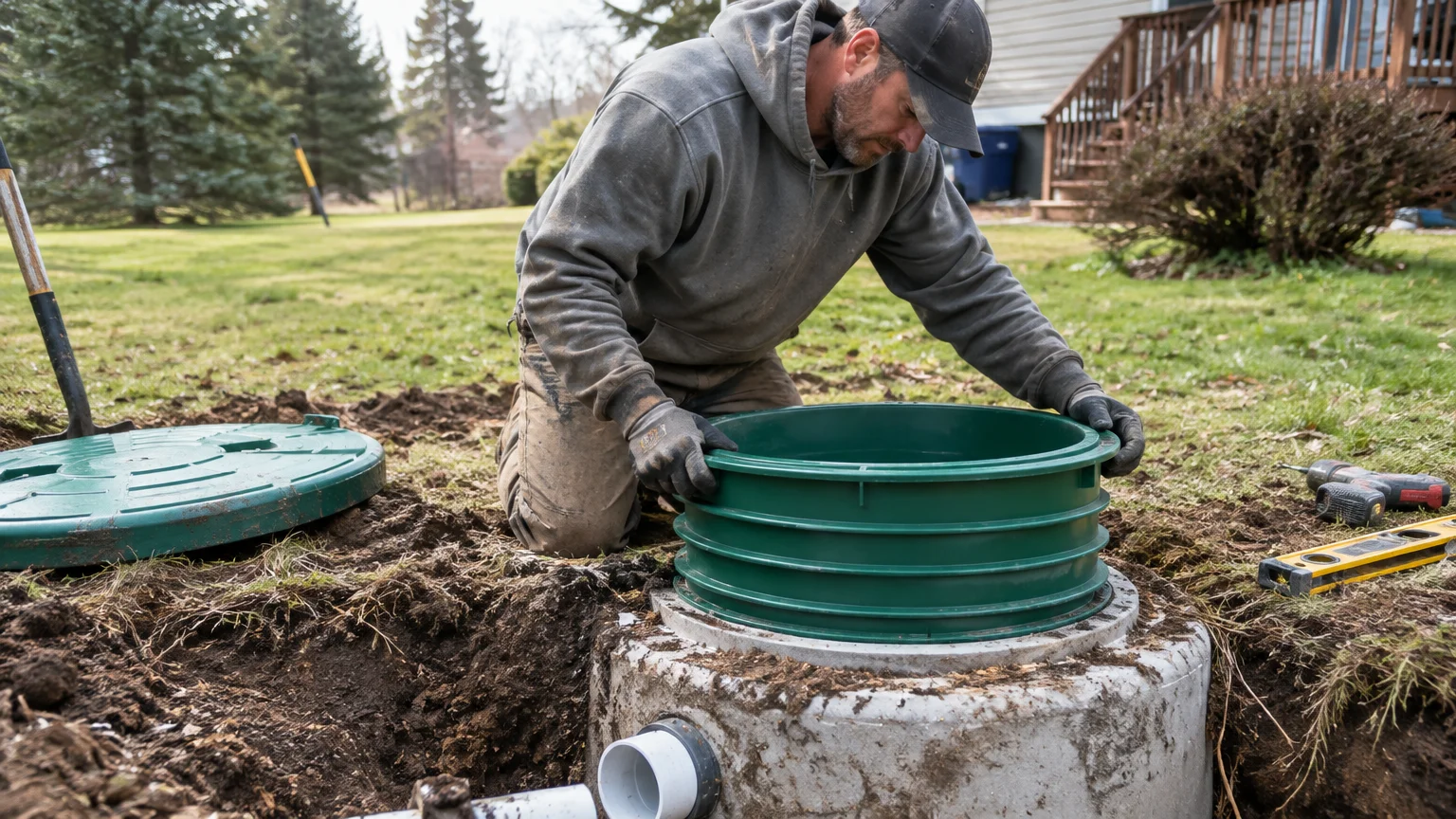
A crooked riser can put stress on the lid and seal. A dirty or poorly fitted seal may let groundwater enter. An unsecured lid can create a fall risk. These issues should be fixed before the area is called finished.
Watch for standing water after rain, wet soil near the connection, bad smells, shifting parts, and repeated soil loss. These signs do not prove one cause. They do show that the work needs a closer review.
A lid that rocks should not be ignored. Do not add stones or soil around it to hold it in place. Find out why it moves and correct the base, riser, or fasteners.
How poor access or tank damage can affect the system
A riser that is too small may make future checks hard. A riser over the wrong opening may hide the main service point. A buried or blocked lid can delay septic pumping and emergency work.
Tank damage can let wastewater escape or groundwater enter. Both problems may affect system performance. If drains slow, toilets gurgle, sewage backs up, or the yard stays wet, seek professional help.
A septic tank replacement may be needed in some cases, but a riser alone does not mean the tank has failed. A professional should check the tank before anyone assumes the worst. Avoid digging more until the condition is clear.
When should you call a septic professional after installing a riser?
A septic professional should inspect the work when the riser shifts, the lid will not seal, or water gathers around the connection. Help is also needed when the tank location is uncertain, the tank is damaged, or the opening is unsafe.
A professional can review the riser, check the tank, and explain the next step. This may include septic pumping, checking baffles, inspecting pipes, or correcting the access assembly.
Signs the installation needs inspection or correction
The following signs deserve attention:
- A lid rocks, lifts, or cannot be fastened safely.
- Soil or water moves into the tank opening.
- Strong smells come from the riser after closing the lid.
- The riser leans, cracks, or separates from the tank.
- Wastewater, slow drains, or wet ground appear nearby.
- The opening is too deep, unsafe, or hard to reach.
Keep people away from a damaged opening. A temporary barrier can help, but it is not a permanent repair. Explain the problem clearly when service is arranged.
Planning future pumping, inspections, and maintenance access
A good riser makes future service easier, but it does not replace maintenance. Keep the riser location, tank records, and service notes together. New owners and tenants should know where the tank is located.
The right service plan depends on the system and property use. More occupants, frequent guests, or a garbage disposal may call for closer checks. A professional can explain what signs to watch for and when septic pumping may be needed.
Keep the area clear throughout the year. Check the lid after storms, yard work, and changes to the ground. Early checks can help prevent a small access problem from becoming a safety issue.
Frequently Asked Questions
How deep should a septic tank be before a riser is installed?
There is no single depth for every septic tank. The riser should bring the lid near the finished ground while keeping it safe from water and traffic. The opening, soil level, slope, and local rules all matter. A professional can confirm the best finished height.
How far does a septic tank need to be from a house?
Required setbacks vary by local rules, soil, tank design, and property layout. A tank may be near a home but still need safe space from foundations, wells, utilities, and drainage features. Property records and the local health department can help confirm the approved layout.
Can a homeowner install a septic tank riser without pumping the tank?
Sometimes, but the tank condition should be checked first. A full tank, broken lid, or wastewater near the opening can make the work unsafe. Pumping may also make inspection easier. A septic professional can decide if service is needed before installation.
Who performs a septic inspection after a riser is installed?
A qualified septic professional usually performs the inspection. The worker may check the riser, lid, seal, tank opening, inlet, outlet, and visible site conditions. Local rules may state who can complete an official inspection. Keep the record with other septic papers.
Does installing a riser replace regular septic tank pumping?
No. A riser improves access, but it does not remove solids from the tank. Pumping needs depend on the tank, household use, system design, and sludge level. Better access can make future service easier and help a technician inspect the system.
Key takeaways
- A septic tank riser must match the tank opening and lid system.
- Homeowners can handle simple checks, cleaning, and light preparation when safe.
- Utilities, unstable soil, damaged lids, and tank cracks need professional help.
- The riser should stay level, secure, clean, and protected from surface water.
- A riser improves access but does not replace inspection or septic pumping.
Conclusion
Learning how to install septic tank riser starts with safety, careful measurements, and matching parts. Expose the tank by hand, prepare a sound connection, secure the lid, and backfill without shifting the riser. Pause when the tank, soil, seal, or local rules are unclear.
Septic Tank Pumping Knoxville helps property owners review septic access and plan service. Contact us to arrange help with a riser inspection or septic tank pumping.