The answer to how often does septic tank need to be emptied depends on tank size, household water use, and the system’s condition. There is no schedule that fits every home. An inspection can show how much waste has built up and help set a pumping plan for your Knoxville property.
Table of Contents
- How often does a septic tank need to be emptied?
- What affects how often a septic tank needs pumping?
- Which septic maintenance tasks can homeowners do?
- How should you prepare for a septic tank pumping?
- What can go wrong if a septic tank is not pumped on time?
- What signs may mean a septic tank needs attention?
- When should you call a septic professional?
How often does a septic tank need to be emptied?
There is no one pumping schedule for every home. The right timing depends on the tank’s size, how many people use it, water habits, and solid waste buildup. A busy home may need a different plan than a home with fewer people.
A septic tank holds wastewater from the home. Heavy solids settle at the bottom, while oils and lighter waste float near the top. The partly treated water then flows to the drainfield. The drainfield is the area where soil helps treat wastewater. Pumping removes built-up solids before they cause trouble.
Why there is no single schedule for every household. More people in a home often send more water and waste into the tank. Frequent laundry, long showers, and leaking toilets can add to the amount. Tank size matters too. A larger tank may hold more waste, but its condition still needs to be checked.
The number of bedrooms can help describe how much use a home may get. But it does not tell the whole story. A three-bedroom home with a large family may use its system more than one with fewer residents. System design and past care matter as well.
How a septic inspection helps determine timing. An inspection checks the tank and other parts of the system. A trained worker can measure the waste layers and look at past service records. This helps the owner plan pumping based on the system’s condition, rather than guess or wait for a backup.
Homeowners in Knoxville can keep pumping and inspection records together. Septic Tank Pumping Knoxville helps property owners learn what their system may need and plan its care. Ask the worker to explain the findings in clear words. Keep a note of when the system should be checked again.
What affects how often a septic tank needs pumping?
Household size, daily water use, tank capacity, and system condition all affect pumping time. No one factor gives the full answer. A sound plan looks at how the home is used and what an inspection finds.
Household size and water use. More people usually mean more wastewater going into the tank. Water use may rise when guests visit, laundry runs often, or several taps are used at once. Leaks matter too. A toilet that keeps running can send water into the system all day without anyone noticing.
Spacing out tasks that use a lot of water can help avoid sudden surges. For example, a household can leave time between laundry loads instead of running many in a row. This does not replace pumping or an inspection. It can help keep extra strain off the system.
Tank capacity, wastewater habits, and system condition. Tank capacity affects how much wastewater the tank can hold. The right size for a home depends on its design and expected use. A septic worker can explain the tank’s capacity and how it relates to the people who use the home.
The tank and drainfield’s condition also matter. A system with damage, poor drainage, or past backups may need closer checks. A drainfield is the area where wastewater leaves the tank and moves through soil. Do not use it as extra space for heavy vehicles or buildings.
Some owners look up septic tank replacement or septic system replacement when trouble starts. Replacement is not the same as routine pumping. Whether a system needs replacement depends on the damage, access, and work involved. An inspection can help find the cause before an owner makes plans.
Keep notes about changes in the household, repairs, inspections, and pumping. Septic Tank Pumping Knoxville can review this history with owners, including people in Bearden, Fountain City, and nearby communities. These notes can help explain what the system may need next. They are also useful for a new owner or tenant.
Which septic maintenance tasks can homeowners do?
Homeowners can keep records, use water with care, and protect the ground above the drainfield. These simple steps do not need a professional. Opening a tank, going inside it, or trying to fix buried parts is not safe work for a homeowner.
Keep records and watch for changes around the system. Write down inspection, pumping, and repair dates. Keep any system plan or home records with these notes. A clear history can help a new owner or tenant learn what work was done and when the system was last checked.
You can also look over the yard from a safe place. Notice wet ground, bad smells, or new trouble with household drains. Do not lift a heavy tank cover to look inside. Septic tanks can hold dangerous gases, and covers may be unsafe to move without the right tools.
Use water carefully and protect the drainfield. Fix dripping taps and toilets that keep running. Spread water use through the day instead of sending a large amount into the system at once. Follow product directions for cleaners. Do not pour grease, paint, medicines, or strong chemicals down household drains.
Keep cars, sheds, and heavy equipment off the drainfield. Do not plant trees or shrubs where their roots may reach pipes. Keep roof drains and yard runoff from flowing toward the tank or drainfield. These steps help protect the soil and the parts that treat wastewater.
You usually do not need a professional for these basic habits. But tank pumping, checks inside the tank, and system repairs should be done by trained workers. A septic tank is never safe for a person to enter, even if it seems empty. Septic Tank Pumping Knoxville can explain safe care and help owners understand which jobs need a worker.
How should you prepare for a septic tank pumping?
Before pumping, gather any system records, find the tank if its location is known, and keep the path to it clear. The worker handles the tank and checks the system as planned. Do not open or enter the tank yourself.
Locate the tank and provide access. Look for a property plan, old inspection notes, or records from a past owner. These may show where the tank and drainfield are. If you do not know the location, do not dig at random. Digging can harm a buried tank, and a trained worker can help find it safely.
People often ask how to find a buried septic tank or how deep it is. The answer changes by property and system design. The ground above a tank may look like the rest of the yard. A septic tank riser is an access point that reaches closer to the ground surface, if the system has one. A worker can explain whether your property has a riser and where it is.
Keep the route clear of parked cars, stored items, and other blocks. Tell the service provider about gates, pets, or anything else that may affect safe access. Do not remove a lid or cover unless the worker asks you and gives safe steps.
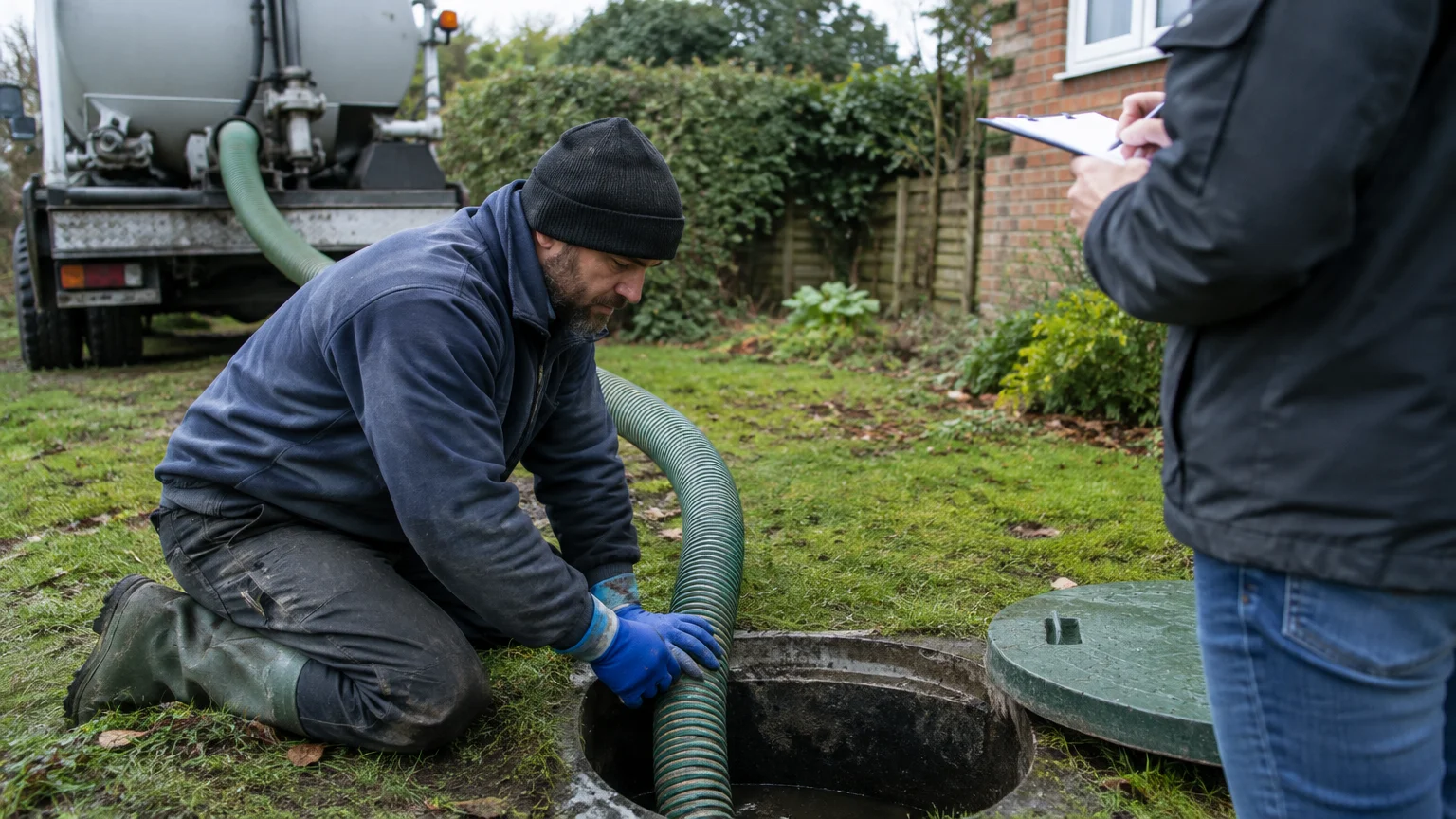
What to expect during a professional pump-out. The worker will reach the tank with proper tools and remove built-up solids. The worker may also check the tank or point out signs that need more care. Ask what was found and what records to keep after the visit.
Pumping does not fix a broken tank or damaged drainfield. It is one part of caring for the system. If the worker finds a concern, ask what it means and what should happen next. Keep the report with the home’s septic records so future owners or tenants can learn about its history.
What can go wrong if a septic tank is not pumped on time?
When too much solid waste builds up, it may leave the tank and reach the drainfield. This can block soil spaces that help treat wastewater. Delayed care can also lead to slow drains, sewage smells, or wastewater inside the home.
Solids can carry into the drainfield. The tank holds solid waste while liquid flows out. If the tank is too full or the system is not working well, more solids may leave the tank. The drainfield may then have trouble taking in and treating wastewater.
A drainfield problem may not be easy to see at first. Wet ground or a change in the yard may be a warning. Do not drive or park there to check it. Heavy weight can harm buried pipes or press down the soil.
Backups, damage, and avoidable disruption. A system that cannot move wastewater well may cause slow drains or backups. Wastewater can harm people and pets. Keep them away from sewage on the ground, and get help promptly.
Waiting for a serious sign can leave an owner with fewer choices. A backup can disrupt daily life. A drainfield problem may need more work than routine pumping. The right response depends on the cause, system design, and damage found during a check.
A useful pumping plan cannot prevent every system failure. Pipes can break, tanks can be damaged, and soil can affect how well the system works. Still, records and inspections may help find trouble sooner. If a worker says the tank needs care, ask what was found and whether it needs prompt action.
What signs may mean a septic tank needs attention?
Slow drains, sewage smells, backups, wet ground, or unusual plant growth near the drainfield may mean the system needs attention. These signs do not prove the tank is full. A worker should check the cause before anyone assumes pumping will solve it.
Slow drains, sewage odors, and wastewater backups. One slow sink may have a simple clog. But if several drains slow down at once, the septic system may be part of the problem. Gurgling sounds or repeated toilet trouble can also be reasons to ask for help.
A strong sewage smell inside or outside is another warning. Wastewater coming back into the home needs prompt care. Do not keep flushing toilets or running water to test the system. This can add water and make a backup worse.
Wet ground or unusually lush growth near the drainfield. A wet patch or greener plants in one area may mean wastewater is not moving as expected. Heavy rain can also make the ground wet, so look at the full picture. Note where the change appears and whether it remains after dry weather.
Keep people and pets away from wet areas that may contain wastewater. Do not dig, cover the area, or try to move the flow. A septic worker can check the tank, pipes, and drainfield to learn what is causing the change.
A septic tank may be buried, and its cover may not be easy to see. Do not search by lifting unknown covers or using heavy tools. If the home has no clear service history, share that when arranging a check. It gives the worker helpful background and prevents guesses about when the tank was last pumped.
When should you call a septic professional?
Call a septic worker when there is a backup, sewage smell, repeated slow drains, wet ground near the drainfield, or no clear pumping history. A worker can check the system and say whether it needs pumping, repair, or a closer look.
When symptoms appear or the pumping history is unknown. Do not try to fix a backup or suspected leak yourself. Keep people away from wastewater and avoid using water until you get advice. Never enter a tank or lean over an open tank to look inside. Dangerous gases can harm or kill a person quickly.
A new home buyer, tenant, or property investor may not know when the tank was last pumped. Records can help, but missing records do not mean the tank is due on a set date. An inspection gives a clearer view of the system’s current condition and helps guide the next step.
How to plan the next inspection and pumping. Tell the worker what your household has noticed, how many people use the property, and what repairs you know about. Ask where the tank and drainfield are, what the inspection found, and when the system should be checked again. Keep the answers with the property records.
Frequently Asked Questions
Can a homeowner pump a septic tank?
No. Pumping needs trained workers and proper tools. A homeowner can keep records, use water with care, and protect the drainfield, but should not open or enter a tank. Septic tanks may contain dangerous gases, and covers can be heavy or unsafe to move.
How deep is a septic tank buried?
The depth changes by property, tank design, and installation. Do not assume a safe depth when looking for a buried tank. Check property records or ask a septic worker to locate it. Do not dig at random or lift a cover you do not know.
What is a septic tank riser?
A septic tank riser is an access point that reaches from the tank toward the ground surface. Some systems have one, and some do not. It can make the tank easier to find and reach. A worker can confirm whether your property has one.
What size septic tank is needed for a three-bedroom house?
The right tank size depends on local rules, system design, and expected use. Bedroom count can help guide planning, but it does not decide the answer by itself. A local septic worker or health department can explain the rules for your property.
Does pumping fix every septic system problem?
No. Pumping removes built-up solids, but it does not fix a broken tank, damaged pipe, or failing drainfield. If signs continue after pumping, the system may need more checks. Ask the worker to explain what was found and what work may be needed.
Key takeaways
- Pumping time depends on household use, tank size, and system condition.
- Inspections and clear records help owners plan future service.
- Homeowners can use water carefully and protect the drainfield.
- Backups, sewage smells, and wet ground need prompt attention.
Conclusion. The right pumping plan comes from the home’s use and the system’s condition, not guesswork. Good records and safe habits help owners notice changes and make informed choices. In Knoxville, contact Septic Tank Pumping Knoxville to plan an inspection or pump-out.
If you are unsure what is happening, a system check can help explain the next step. Use the site’s contact options to reach Septic Tank Pumping Knoxville.
If you are not sure what you are dealing with, it is worth having someone look at it before it turns into a bigger job. Get in touch with Septic Tank Pumping Knoxville today and we will tell you where you stand.