The answer to what size septic tank for 3 bedroom house owners need depends on local rules, water use, soil, and site design. Many three-bedroom homes use a common residential tank size, but no single size fits every property. Permits, records, and a site review give the safest answer in Knoxville.
A septic tank may look like a simple buried container, but its size affects the whole system. A tank that is too small may need septic pumping more often. A larger tank may not fix a blocked pipe, poor soil, or a failing drainfield.
Septic Tank Pumping Knoxville helps property owners understand the records and checks needed before septic work starts. The goal is not to guess. The goal is to match the home, land, and local approval rules.
Table of Contents
- What Size Septic Tank Does a 3 Bedroom House Need?
- How Is Septic Tank Size Determined for a Three Bedroom Home?
- Can a Three Bedroom House Need a Larger Septic Tank?
- What Is the Difference Between Septic Tank Size and Drainfield Size?
- How Deep Is a Septic Tank for a Three Bedroom House?
- How Can You Check the Septic Tank Size on Your Property?
- What Should You Confirm Before Installing or Replacing the Tank?
- Frequently Asked Questions
- Key Takeaways
- Conclusion
What Size Septic Tank Does a 3 Bedroom House Need?
A three-bedroom home often needs a residential septic tank based on its approved bedroom count and expected water use. The exact capacity is not the same for every home. The local health department, permit, soil report, and system plan may set the final size.
Bedroom count is often used to estimate possible use. It does not always show how many people live in the home now. A spare room may stay empty, but local rules may still count it as a bedroom. This helps protect the system if the home changes owners.
A septic tank holds wastewater while heavy solids settle and lighter material rises. The liquid then moves toward the drainfield. A larger tank can allow more settling time, but it cannot repair poor soil, a broken pipe, or a failing drainfield.
Sizing rules can differ across Tennessee. Some areas mainly use bedroom count. Others also review daily water flow, plumbing fixtures, soil findings, slope, and the type of system. A septic tank replacement may need to follow current rules, even if the old tank met past rules.
For this reason, a general tank size is only a starting point. Property owners should check the approved permit before ordering a tank. Septic Tank Pumping Knoxville can help Knoxville property owners understand which records and site details should be reviewed first.
How Is Septic Tank Size Determined for a Three Bedroom Home?
Septic tank size is usually based on bedroom count, expected water flow, and local rules. Designers may also check the plumbing layout, soil, slope, and planned drainfield. The approved system plan matters more than a general rule found online.
Bedroom count helps estimate possible occupancy. Expected flow includes water from toilets, showers, sinks, washing machines, and other fixtures. A home with many residents may put more demand on its system than a home with one or two people.
Local officials may set a minimum tank size for a three-bedroom home. They may also require a permit, soil review, site plan, or inspection. These steps help show that wastewater can be treated safely on the property.
A perc test is a soil test that checks how quickly water moves through the ground. It may help with septic planning, but it does not decide tank size by itself. Soil depth, groundwater, slope, and other site details also matter.
A licensed designer, installer, or local permit office can explain the rule for one property. A homeowner can gather records and count the bedrooms. However, digging near a buried tank or changing the system should be left to trained workers.
Regular maintenance also helps protect the system after sizing is complete. Homeowners should watch water use, avoid flushing harmful items, and arrange septic pumping when needed. Emergency pumping may be needed when wastewater backs up or the tank is full.
Can a Three Bedroom House Need a Larger Septic Tank?
Yes, a three-bedroom house may need a larger tank when water use, fixtures, additions, or site limits create more demand. The bedroom label is only one part of the design. A professional should review changes before the system is altered.
A larger tank may be considered when several people live in the home. Frequent laundry, long showers, large tubs, and busy kitchens can also add water flow. Water-saving fixtures may lower use, but they do not replace proper system design.
Home additions need special care. Turning an attic, basement, garage, or office into a bedroom may change the approved load. Adding bathrooms or a separate living space may also affect permits and drainfield needs.
Common items to review include:
- Added bedrooms or sleeping rooms
- New bathrooms, tubs, or laundry areas
- Large households or frequent guests
- High-use appliances and plumbing fixtures
- A home business or separate living space
A larger tank is not always the best answer. If liquid leaves the tank slowly, the drainfield may be the real concern. If solids are entering the drainfield, pumping, cleaning, or repairs may be needed. An inspection helps separate a tank problem from a soil or pipe problem.
Property owners should not assume that a larger replacement tank is allowed. Septic Tank Pumping Knoxville can help homeowners in the main Knoxville area, including Bearden, Fountain City, and nearby communities, prepare questions for inspection and permits.
What Is the Difference Between Septic Tank Size and Drainfield Size?
The septic tank stores and separates wastewater. The drainfield receives liquid and lets the soil finish the treatment process. These are different parts of one system. A larger tank does not always mean the property can support a larger home.
Inside the tank, heavy solids settle as sludge. Grease and other light material rise as scum. The clearer liquid between these layers flows toward the drainfield. Baffles or filters help keep unwanted material from leaving the tank.
The drainfield may use buried trenches, chambers, or other approved parts. It spreads liquid into the soil. Soil type, usable area, groundwater, slope, and required setbacks can affect its size and location.
A property may have a tank that suits three bedrooms but a drainfield that cannot support an addition. The reverse may also happen. A good tank cannot make shallow soil deeper or make wet ground suitable for treatment.
Many systems also need space for future repairs. This space is often called a reserve area. A site plan may show the tank, drainfield, property lines, wells, buildings, and other features.
Signs of trouble may include slow drains, sewage odors, wet ground, or very green grass near the drainfield. These signs need prompt attention. Keep children and pets away from sewage or dirty standing water.
How Deep Is a Septic Tank for a Three Bedroom House?
There is no single depth for a septic tank serving a three-bedroom house. Installation depth depends on the home’s pipe height, tank design, soil, groundwater, access, and local rules. The tank should stay reachable for inspection and pumping.
The building sewer must usually flow toward the tank at the correct slope. This affects the inlet height. The outlet must then connect to the distribution box, pump tank, or drainfield at the approved level.
Soil and groundwater also affect depth. A high water table may limit how deep the system can go. Rock, steep slopes, poor soil, or shallow usable soil may require another design. An alternative system may be needed on a difficult site.
Access matters as much as depth. The lid should be located and protected so a pumping worker can reach it safely. Burying the lid too deeply can make future checks harder and may cause damage during digging.
A property owner can look for a riser, lid, cleanout, or service marker without digging. Before excavation, check for underground utilities and use safe locating methods. A professional can confirm the location and depth with proper tools.
How Can You Check the Septic Tank Size on Your Property?
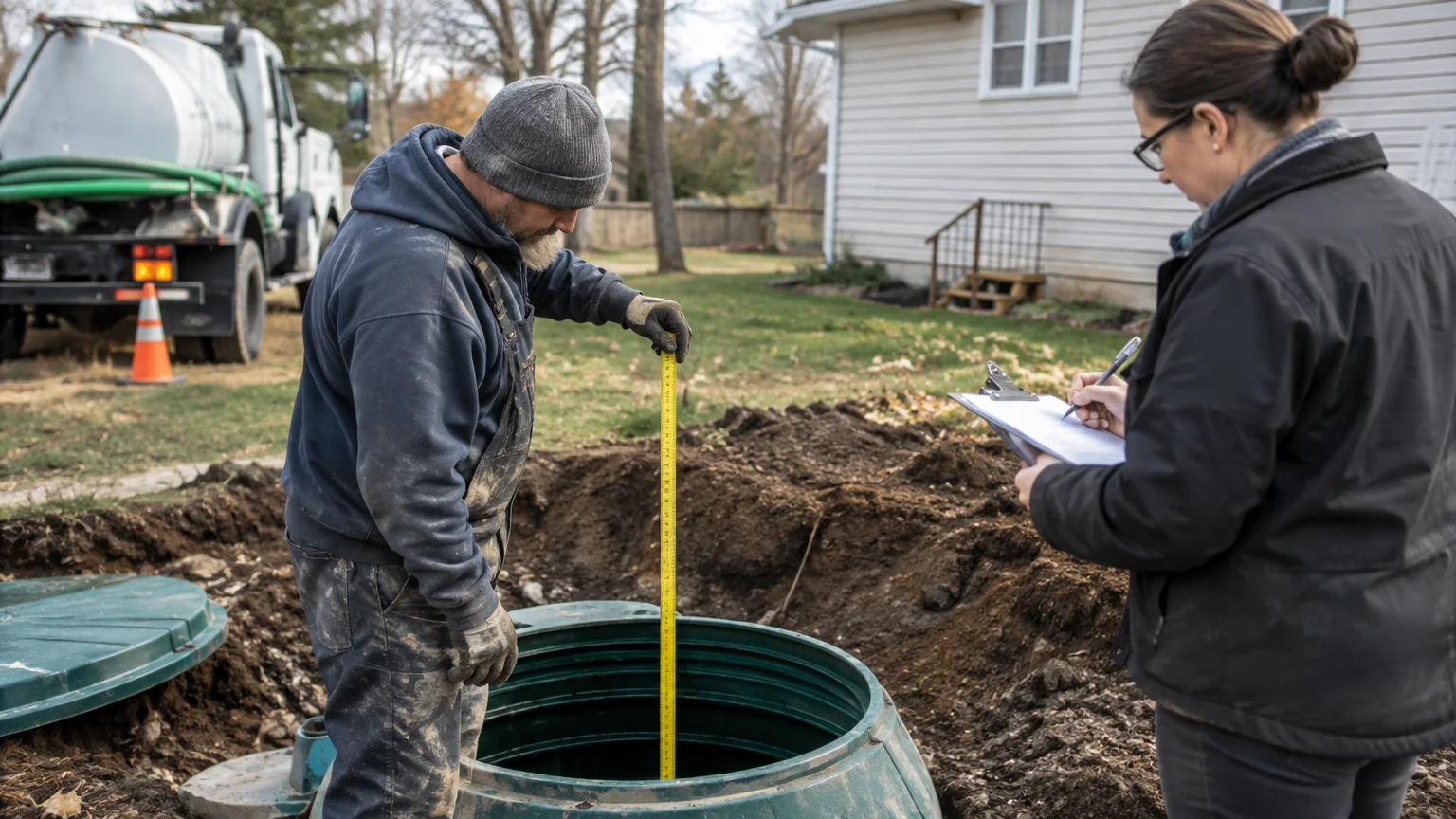
The best way to check septic tank size is to review the permit and installation records. Then confirm the information during an inspection. Records may show tank capacity, location, drainfield design, and approved bedroom count.
Start with the local health department or permit office. Some offices keep septic permits in property files or online systems. A county property search may help find the parcel, but tax records may not list the tank size.
You can also search documents from a home purchase. Useful records may include a septic permit, inspection report, as-built drawing, survey, repair record, or installation receipt. Sellers, former owners, builders, and property managers may have more copies.
A safe records checklist includes:
- The original septic permit
- The approved site or as-built plan
- Pumping and inspection records
- Documents from a sale or remodel
- Notes about the tank lid and access point
A professional inspection can confirm the tank location, approximate capacity, condition, inlet and outlet pipes, baffles, filter, and visible trouble signs. The inspector may need to uncover a lid or use other methods. Homeowners should never enter a septic tank because its gases can kill.
If records are missing, the tank may sometimes be measured or identified by its construction and access points. The result should still be checked against local rules before replacement or expansion.
What Should You Confirm Before Installing or Replacing the Tank?
Before installing or replacing a septic tank, confirm the permit, approved capacity, setbacks, soil findings, access plan, and drainfield design. The work should match local rules and the actual conditions on the property.
Setbacks are required spaces between septic parts and features such as wells, property lines, buildings, streams, and surface water. Exact distances depend on local rules and site conditions. Do not rely on a diagram from another state.
Important questions include:
- What tank capacity is approved for the home?
- Does the project need a new permit?
- Where are the tank and drainfield located?
- Are setbacks still met after planned changes?
- Is there a reserve area for future repairs?
- Can pumping equipment reach the access lids?
Pumping and inspection records also help with future decisions. They may show how fast solids build up, whether filters were cleaned, and whether past owners reported backups or odors. Records cannot replace a current inspection, but they give useful history.
Replacement work may uncover old materials, damaged pipes, or a drainfield that needs help. The tank and drainfield should be reviewed as one system. A permit office, qualified inspector, or septic service worker can explain the next safe step.
For property owners in the wider Knoxville area, Septic Tank Pumping Knoxville can review the available information and help identify what needs professional confirmation. Some companies also provide 24/7 service for urgent wastewater problems, but emergency help does not replace proper system planning.
Frequently Asked Questions
Is a three-bedroom house always approved for the same tank size?
No. Local rules, expected water flow, soil, and system design can change the approved capacity. Bedroom count is often a starting point, not the whole answer. Check the property permit before installation, replacement, or an addition.
How do you find septic tank records online?
Start with the county or local health department record system. Search by parcel number, street address, or owner name when available. Online files may be incomplete, so you may need to request older permits, inspection reports, or site plans.
Who performs a perc test?
A qualified soil worker, engineer, or approved specialist usually performs or oversees a perc test. Local rules decide who may complete it. The test helps check soil drainage, but it does not decide tank size by itself.
How deep should a septic tank be?
The tank should be deep enough to connect with the building sewer and approved drainfield. It must also stay reachable for inspection and pumping. Pipe height, soil, groundwater, slope, and local rules affect the final depth.
Is a septic tank the same as a cesspool?
No. A septic tank is a sealed container that separates solids and sends liquid to a drainfield. A cesspool is an older wastewater structure that may let liquid move through its walls. Local rules may restrict or require replacement of older systems.
Key Takeaways
- A three-bedroom home does not have one universal septic tank size.
- Bedroom count, water use, soil, and local rules all affect design.
- Tank capacity and drainfield size are separate system parts.
- Depth depends on pipe height, groundwater, soil, access, and permits.
- Records and a professional inspection give the best property answer.
Conclusion
The question of what size septic tank for 3 bedroom house owners ask cannot be answered by bedroom count alone. Local rules, water flow, soil, drainfield limits, and site access all matter. Existing permits and inspection records are the best place to start.
A homeowner can gather documents and look for safe access points without digging. Tank entry, deep excavation, wastewater contact, and system changes require trained help. Contact us to arrange the next step for septic tank pumping with Septic Tank Pumping Knoxville.